Temperature has a direct influence on how a LiFePO4 battery charges, delivers power and ages. Cold conditions can increase internal resistance and reduce available performance, while prolonged exposure to high temperatures can accelerate battery degradation even when the battery appears to operate normally.For outdoor equipment, solar lighting, industrial systems and other temperature-sensitive applications, the important question is not simply “Can this battery work in the cold or heat?” Battery designers also need to distinguish between charging temperature, discharge temperature, short-term exposure and long-term operating conditions.
Quick answer: cold temperatures generally make lithium batteries less willing to accept and deliver current, while heat can accelerate aging. Specialty high-temperature and low-temperature cells are therefore designed differently from standard cells for applications operating outside normal conditions.
Hot vs Cold Weather: How LiFePO4 Battery Behavior Changes
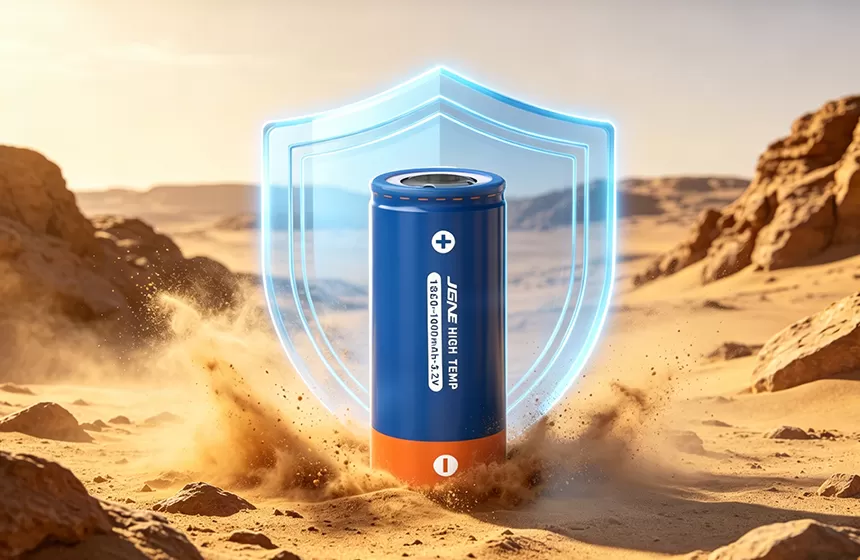
HOT CONDITIONS
Heat Accelerates Battery Stress
Elevated temperature can improve reaction speed temporarily, but prolonged heat increases chemical aging and can shorten battery service life. Battery selection should therefore consider both immediate performance and long-term thermal exposure.

COLD CONDITIONS
Cold Increases Internal Resistance
Lower temperatures slow electrochemical processes and increase resistance inside the battery. The result can be lower available power, greater voltage drop and reduced charge acceptance.
What Does Temperature Change Inside a LiFePO4 Battery?
Temperature affects several battery characteristics at the same time. This is why one temperature specification alone cannot describe the complete behavior of a cell.
| Battery Characteristic | Cold Conditions | Hot Conditions |
|---|
| Internal Resistance | Generally increases, making current delivery more difficult. | May initially decrease, but long-term heat increases aging stress. |
| Available Power | Can decrease because voltage drops more under load. | Immediate power may remain strong, but heat management becomes more important. |
| Charge Acceptance | Reduced; cold charging requires special attention. | Very high temperature can also limit safe charging conditions. |
| Usable Capacity | Available capacity can appear lower during cold operation. | Prolonged heat can contribute to permanent capacity loss over time. |
| Battery Aging | Low temperature mainly creates short-term performance limitations. | Elevated temperature can accelerate long-term chemical degradation. |
COLD WEATHER PERFORMANCE
What Happens to LiFePO4 Batteries in Cold Weather?
As temperature falls, ion movement inside the battery becomes slower and internal resistance rises. This means the battery experiences more voltage drop when current is drawn, particularly under heavier loads.
A cold battery may therefore still contain stored energy but be temporarily unable to deliver that energy with the same voltage stability and current capability available at moderate temperature.
More Voltage Drop
Higher internal resistance causes terminal voltage to fall more under load.
Less Available Power
Motors and high-current equipment may experience reduced startup or peak-power capability.
Reduced Charge Acceptance
Charging becomes more sensitive as cell temperature approaches or falls below freezing.
Cold Discharge and Cold Charging Are Not the Same Thing
This is one of the most important distinctions in cold-weather battery design. A battery may be capable of discharging at a sub-zero temperature while still having much stricter limits on charging at that same temperature.
General lithium-ion charging guidance warns that ordinary cells require particular caution around freezing temperatures because low-temperature charging can create damaging electrochemical conditions. Specialty low-temperature cells, heating systems or temperature-dependent charging strategies may be used when a project must operate outside the normal charging range.
Cold Discharge
The main concerns are reduced available power, increased voltage drop and lower usable capacity under load.
Cold Charging
Charging requires tighter control of cell temperature, current and voltage and should always follow the specific cell manufacturer's limits.
HOT WEATHER PERFORMANCE
What Happens to LiFePO4 Batteries in High Temperatures?
Heat presents a different problem from cold. Battery reactions generally become faster as temperature rises, so short-term electrical performance may not appear poor. However, prolonged heat increases chemical stress and can accelerate permanent aging.
For equipment installed outdoors, inside sealed enclosures or near heat-generating electronics, the battery temperature may also be considerably higher than the surrounding air temperature. Pack thermal design therefore matters alongside the cell's published temperature range.
Faster Aging
Long-term exposure to elevated temperature accelerates degradation mechanisms.
Thermal Stress
Cell temperature can rise further during charging and high-current discharge.
Reduced Long-Term Capacity
Extended heat exposure can contribute to faster permanent capacity loss.
Heat, State of Charge and Battery Aging
Temperature is not the only factor controlling battery aging. High temperature combined with prolonged storage at a high state of charge can be more stressful than either condition alone.
Standard vs High-Temperature vs Low-Temperature LiFePO4 Cells
A specialty temperature cell is not simply a standard cell with a wider number printed on the datasheet. Cell manufacturers may adjust electrolyte formulation, electrode materials, separator materials and other design elements to improve performance under targeted environmental conditions.
| Cell Type | Primary Design Priority | Typical Selection Reason | Important Check |
|---|
| Standard / Capacity Cell | Capacity and normal operating conditions | Long runtime without extreme climate requirements | Normal charge / discharge range |
| High-Temperature Cell | Thermal stability under elevated temperature | Hot climates, heated enclosures or industrial systems | Published charging and discharge limits |
| Low-Temperature Cell | Power and capacity retention in cold conditions | Winter climates and sub-zero outdoor equipment | Cold charging limits as well as discharge limits |
JGNE HIGH TEMPERATURE PLATFORM
Cells Designed for Elevated-Temperature Applications
JGNE's high-temperature battery platform uses temperature-oriented electrolyte and material design to support applications where heat exposure is a major battery-selection factor.
Typical project categories include solar lighting, outdoor equipment, industrial instruments and other systems exposed to elevated operating temperatures.
Explore JGNE High Temperature Batteries → JGNE LOW TEMPERATURE PLATFORM
Cells Developed for Cold-Weather Performance
JGNE's low-temperature battery platform uses a low-temperature electrolyte formulation and optimized electrode materials to improve battery performance in freezing environments.
These cells are relevant to cold-region solar lighting, outdoor energy equipment, cameras and industrial systems that must operate through winter conditions.
Explore JGNE Low Temperature Batteries → JGNE LFP26650 Temperature-Oriented Cell Examples
Product selection should always be based on the specification of the exact cell model rather than a generic temperature claim.
| Parameter | LFP26650 High Temperature | LFP26650 Low Temperature |
|---|
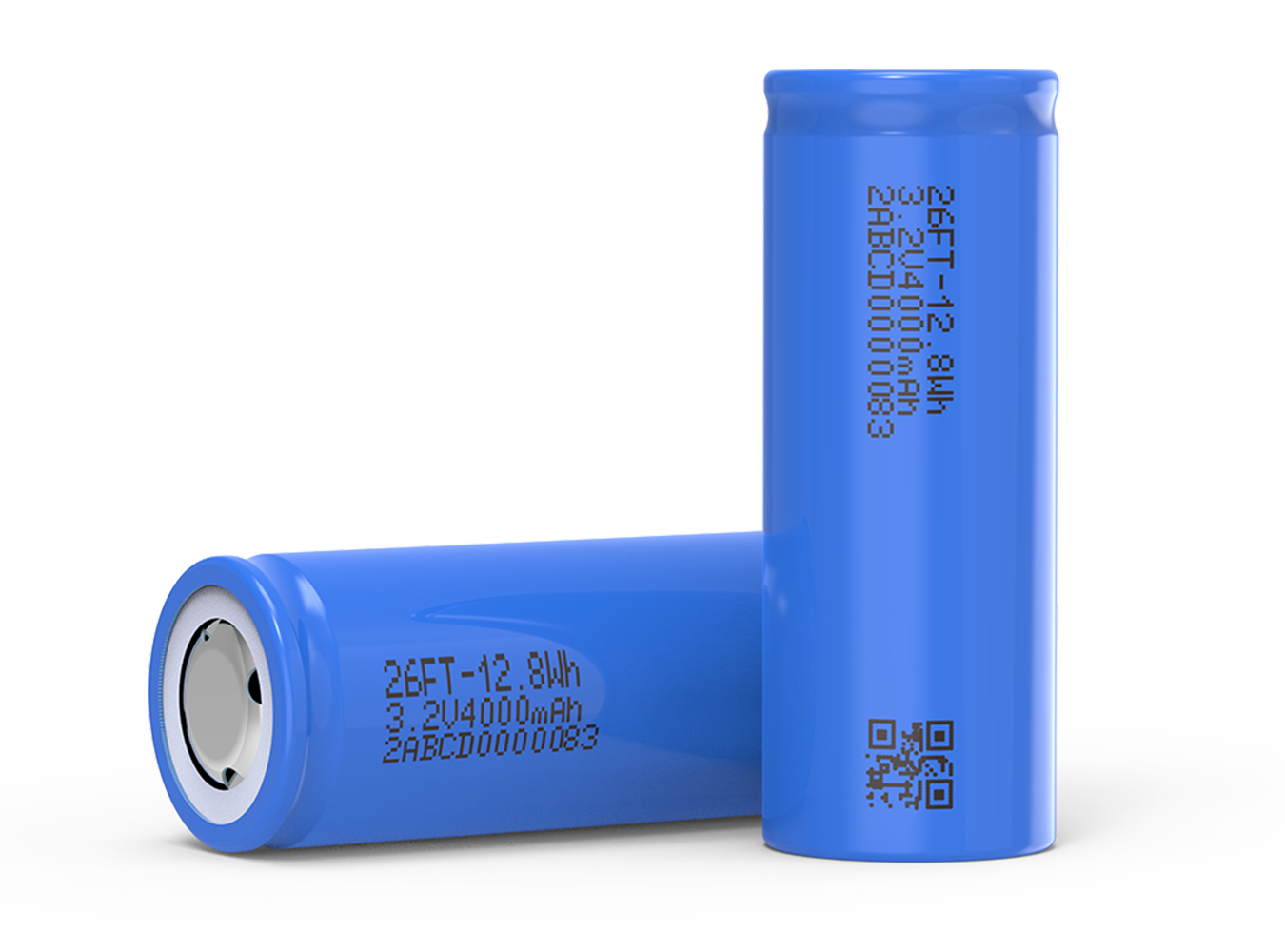
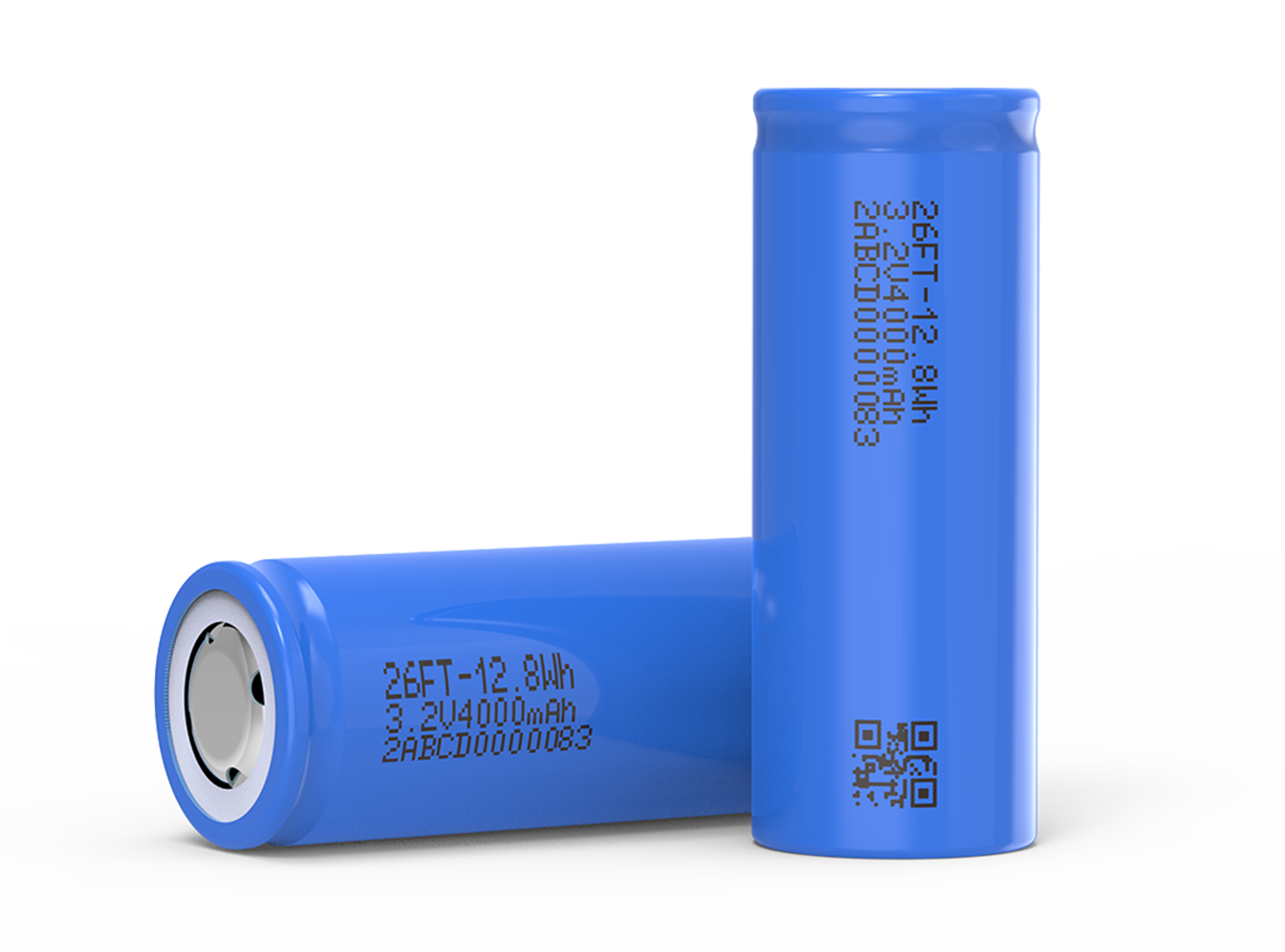
| Battery Model | JGTR26650-4000mAh-3.2V | JGLFR26650-3200mAh-3.2V |
| Nominal Voltage | 3.2V | 3.2V |
| Nominal Capacity | 4000mAh | 3200mAh |
| Working Temperature — Charge | 0~75°C | 0~75°C |
| Working Temperature — Discharge | -30~75°C | -30~75°C |
| Internal Resistance | ≤20mΩ | ≤20mΩ |
Important:
identical headline temperature ranges do not mean two cell platforms are identical. Capacity, chemistry formulation, performance retention, duty cycle and the complete application requirements should all be considered before choosing a cell.
How to Choose a LiFePO4 Battery for Hot or Cold Environments
Temperature range should be treated as one part of a larger battery specification. The following information should be defined before the cell platform is selected.
1. Minimum & Maximum Temperature
Define the real battery temperature rather than only the published outdoor air temperature.
2. Charge Temperature
Confirm whether the system must charge while the battery is at its coldest or hottest condition.
3. Required Load Current
Higher current makes voltage drop and thermal effects more important.
4. Exposure Duration
Short exposure and continuous operation at extreme temperature create different design requirements.
5. Installation Environment
Enclosure, sunlight, nearby heat sources and airflow can change the real cell temperature.
6. Required Service Life
Thermal exposure should be considered together with cycle life and long-term capacity requirements.
Battery Pack Design Matters as Much as Cell Selection
A temperature-capable cell cannot compensate for a battery pack that ignores thermal conditions. The full system should be designed around the expected environment.
Temperature Sensing BMS temperature sensing can help control charging and discharge outside allowed limits.
Thermal Insulation Insulation can reduce rapid temperature changes in cold or hot environments.
Heating Some cold-weather battery systems warm the pack before charging.
Cooling / Ventilation Hot installations may require airflow, thermal spacing or other heat-control measures.
Charge Control The charging system must respect temperature-dependent cell limitations.
Design Margin Capacity and power requirements should include real environmental operating margin.
Which Temperature Battery Platform Does Your Project Need?
Consider a High-Temperature Platform When:
Battery enclosure temperature remains elevated for long periods
Equipment operates in hot outdoor climates
Solar heating raises internal enclosure temperature
Industrial equipment produces additional heat
Long-term thermal stability is a key requirement
Consider a Low-Temperature Platform When:
Equipment must start and operate below freezing
Winter voltage drop cannot interrupt the load
Outdoor devices remain exposed overnight
Cold-weather power availability is critical
The charging strategy must account for low cell temperature
Temperature Is Especially Important for Outdoor Lighting Batteries
Solar street lights, landscape lighting and other outdoor fixtures may experience both daytime heat and nighttime cold. Cell temperature, charging conditions, lighting runtime and enclosure design should therefore be evaluated together.
Explore JGNE Lighting Battery Solutions → 5 Common Temperature-Related Battery Selection Mistakes
1. Using discharge temperature as the charging limit
Charging and discharge temperature specifications are separate and should never be assumed to be identical.
2. Using ambient temperature instead of actual battery temperature
Sunlight, enclosure design and nearby electronics can make battery temperature very different from outside air temperature.
3. Assuming a wide temperature range guarantees identical performance
A battery may be permitted to operate across a wide range while still delivering different capacity, voltage and current performance at the extremes.
4. Ignoring long-term heat exposure
A cell may function in heat while still aging significantly faster if it remains hot for extended periods.
5. Selecting the cell but ignoring pack thermal design
BMS settings, enclosure, airflow, insulation and charging strategy all influence actual battery temperature performance.
LiFePO4 Temperature FAQ
Do LiFePO4 batteries lose capacity in cold weather?
Cold temperatures increase internal resistance and can reduce the energy and power available to the load. Some of this performance can recover when the battery returns to a moderate temperature.
Can a LiFePO4 battery be charged below 0°C?
This depends on the exact cell design and charging strategy. Standard lithium-ion batteries generally require strict limits around sub-zero charging, while specialty cells or heated systems may support different conditions. Always follow the specific cell datasheet.
Does high temperature permanently damage LiFePO4 batteries?
Prolonged elevated temperature can accelerate battery aging and permanent capacity loss. The rate depends on cell design, temperature, state of charge and duty cycle.
Is discharge temperature the same as charging temperature?
No. Lithium batteries commonly have different permitted temperature ranges for charging and discharging.
When should I use a low-temperature LiFePO4 cell?
Consider a low-temperature platform when the battery must reliably start, discharge or remain operational in freezing or sub-zero environments.
When should I use a high-temperature battery cell?
High-temperature cells should be considered when sustained battery temperature is expected to exceed the conditions appropriate for a standard cell, particularly in hot outdoor or industrial installations.
Need a LiFePO4 Battery for an Extreme-Temperature Project?
Send JGNE your minimum and maximum operating temperatures, charging temperature, required voltage, capacity, load current, installation environment and expected duty cycle. Our team can help evaluate whether a standard, high-temperature or low-temperature cell platform is more suitable for your application.
Discuss Your Temperature Battery Project